Enquipmen Layot
Base station communication modem
Range of Symons radio stations, two-in-one, for dynamic radio communication networking with self-healing structure like DM 1-band MESH networks
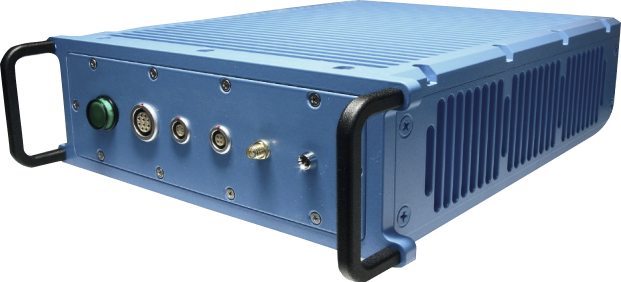
Range of Symons radio stations, two-in-one, for dynamic radio communication networking with self-healing structure like DM 1-band MESH networks
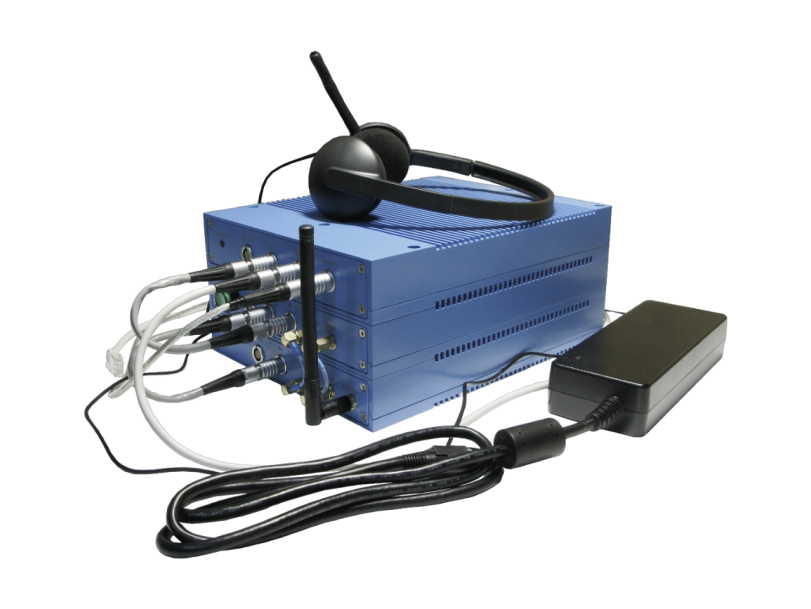
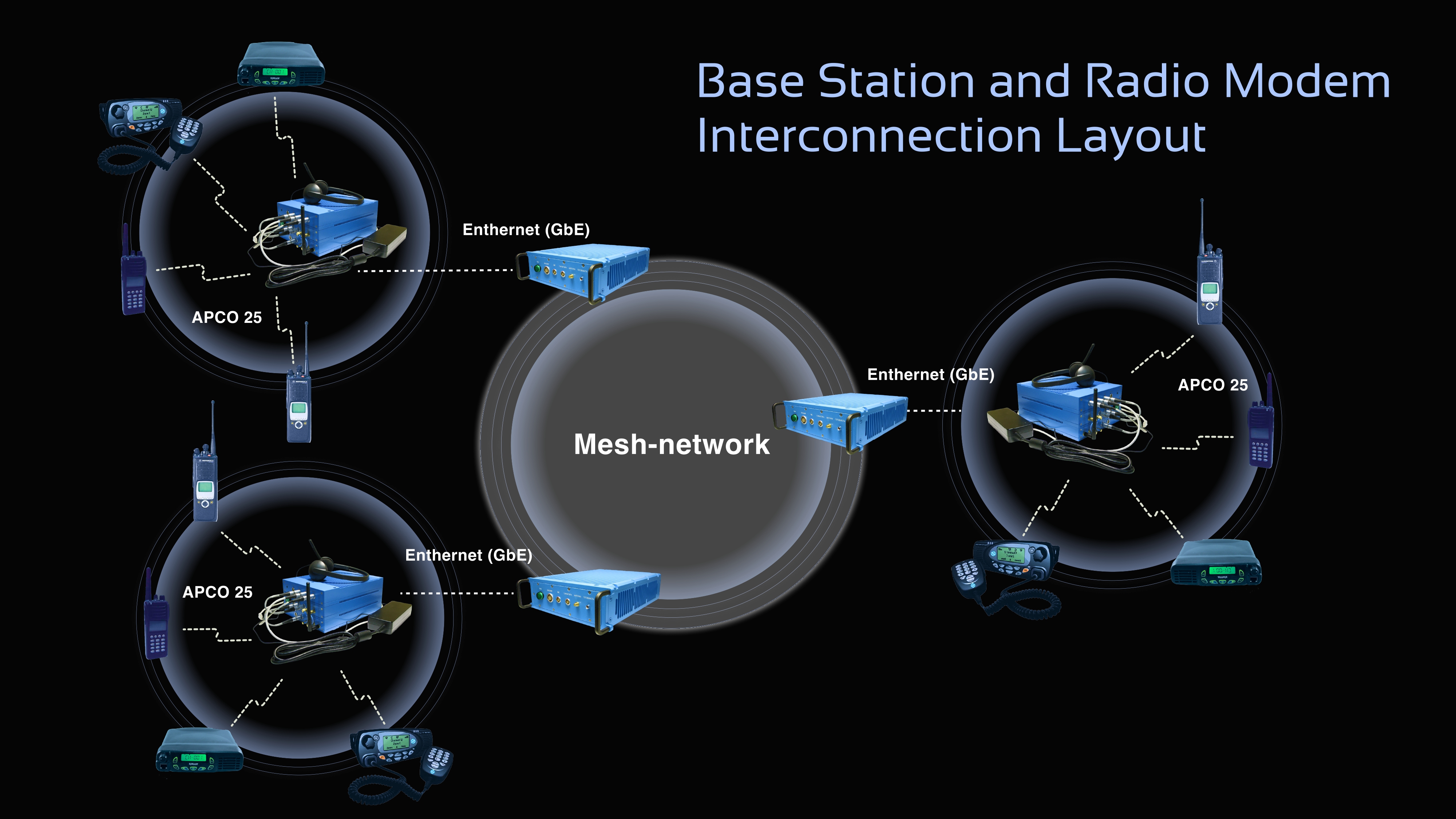
Wideband base station radio communication modem is used in peer-to-peer dynamic radio communication networking with self-healing structure like DM 1-band MESH networks. Radio modem in radio network can serve as a terminal device or a repeater. Radio modem transmits and receives data from the end user via a radio modem interface.
Radio modem signals and communication protocols ensure efficient data transmission over the air with high resistance to interference and low signal detection. High-order QAM and OFDM signals, and TDMA and MESH-network protocols applied; high-speed IP data flow routing supported, data protection using high efficiency noise-resistant coding.
Radio modem design is developed using the latest Software Defined Radio (SDR) technology. The radio modem design is based on the software upgrade concept without hardware replacement.
Professional mobile radio communication SDR base station is based on the uniform digital platform and used in corporate and departmental mobile communication networks.
Due to its SDR architecture the base station can operate in different modes depending on the software installed (downloaded) without changes in hardware.
The primary mode is APCO P25 radio communication in 12.5 kHz VHF service band with low-rate voice and data transmission support.
A modular base station architecture consists of a processing unit, transmitter and exciter modules and an amplifier. Transmitter and exciter are combined in one emission unit, and up to 3 emission units can be used in the station.

Range of versatile digital multiband programmable combat radio stations in mobile, backpack and handheld modifications:
| Basic specifications | |
| Operating frequency range |
30 … 89,999 MHz (1) 90 … 224,999 MHz (2) 225 … 511,999 MHz (3) 512 … 2 500 000 MHz (4) |
| Modulation |
FSK (1) FSK, ASK (2) FSK, ASK (3) FSK, ASK, PSK (4) |
| Channel spacing | 5 Hz |
| Channel spacing (ASK) | 25, 12.5, 8.3 kHz |
| Deviation (FSK, PSK) | 5, 6.25, 8 kHz |
| Supports operation via Gonets | Yes, in a packet mode or multiple access mode with |
| Channels number (pre-saved/FHSS) | At least 100 |
| Frequency hopping number | At least 12 500 (up to 20 000) |
| Direct Sequence Spread Spectrum support (another noise-resistance mode) | Data packet transmitted with the interval of 8 MHz |
| Power supply voltage | 24 VDC (vehicle network or battery pack) 220 VAC (with power supply unit) |
| Overall dimensions | According to Customer's request |
| Weight | Depends on configuration |
| Voice transmission | Simplex, Semi-Duplex (at least 16 kbps) Voice coding |
| Data transmission | Up to 512 kbps Data coding |
| Data Transfer | Interface USB, Ethernet |
| Tablet, smartphone integration | Yes |
| Noise-resistant coding | RS FEC |
| Data coding | Voice, data, extra coding Extra coding when connected to land network |
| Control |
Remote, using a remote control up to 250 m Interface – RS-485 (422) |
| Transmitter | |
| Transmitter output power |
1 … 10 W (1) 1 … 20 W (2) 1 … 10 W (3) 1 … 10 W (4) |
| External amplifier support for radio coverage extension | Up to 40 W |
| Output power adjustment interval | 1 dB |
| Harmonic suppression | 40 dBc |
| Frequency stability of reference oscillator | 1х10-6 |
| Receiver | |
| Receiver sensitivity |
FSK – 118 dBm (for 10 dB SINAD) ASK, PSK –110 dBm (for 10 dB SINAD) and 70% modulation |
| Selectivity | 60 dB (for 10 dB SINAD) |
| GNSS support | Integrated receiver GLONASS, BAYDU, GPS, Odissey |
| Resistance to environmental impact | |
| Operating temperature, ºС | - 50 … + 50 |
| Relative humidity | up to 100% at 25 °С up to 75% at 15 °С |